


 SKU: DV/RES/BBPNLMIC
Blackmagic Design DaVinci Resolve Micro Panel
Blackmagic Design DaVinci Resolve Micro Panel
In stock
View full details WhatsApp us for inquiries


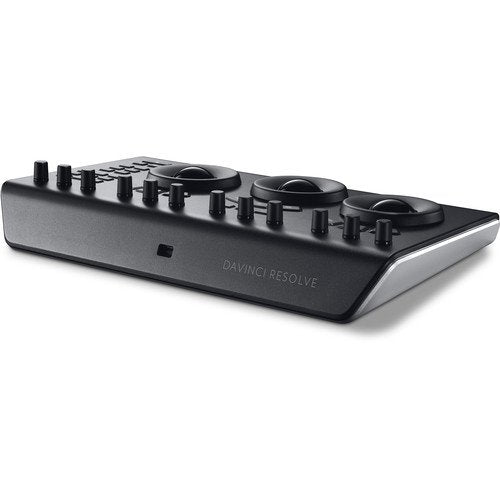
Blackmagic Design DaVinci Resolve Micro Panel — Product Guide
The Blackmagic Design DaVinci Resolve Micro Panel from is a portable control surface that offers more control and a faster process to DaVinci Resolve Soundstage software than working with a keyboard and mouse alone.
Appropriate for editors and colorists that requirement a portable control surface, it incorporates three high-resolution, weighted trackballs and 12 control knobs for accessing important primary color-correction utilities in the supplied Resolve software.
Eighteen purpose-built keys on the right side additionally give you availability to the most commonly employed grading contains and playback settings.
One USB 3.0 Type-C link connects the Micro Panel to a desktop or laptop while supplying its power, so a separate power source is unnecessary.
It additionally interfaces with macOS, Windows, or choose Linux systems.
For the panel to operate with Resolve, your computer must be running DaVinci Resolve 14.3 or DaVinci Resolve Soundstage 14.3 or later.
An supplied USB 3.0 Type-A to USB Type-C lead delivers backward compatibility for systems that deliver USB 3.0 Type-A ports.
You can additionally click here.
Feature Highlights — Blackmagic Design DaVinci — Product Guide
Small enough to make with you, so you can use it with any Resolve setup (14.3 or later) and do colour correction on on-location or at the editor's suite
DaVinci Resolve Soundstage software activation principal included
Retains basic layout with Mini and Enhanced Panels
Connections with and settings software
Three track balls with outer control rings
Log and Offset color-correction selection keys
Custom control knobs with 4096 steps per rotation and push-button reset
Primary Correction Original Control Knobs
Control knobs are grouped into four locations of three knobs.
Luminance: Guide — Blackmagic Design DaVinci — Product Guide
- Y lift Control: Adjust the contrast of the image in the darker areas, specifically in the Y (luminance) channel only. This adjustment allows changing the black point without changing saturation.
- Y Gamma Control: Adjust the contrast of the image in the mid-tone areas, specifically in the Y (luminance) channel only. This control helps add depth and extra vibrancy to shots.
Contrast: Guide — Blackmagic Design DaVinci — Product Guide
- Contrast Control: Increase contrast to make the blacks darker and the whites brighter, or decrease contrast to do the opposite.
- Pivot: Change the center of tonality about which dark and bright parts of the image are stretched or narrowed during a contrast adjustment.
- Mid-Tone Detail: Affect the contrast of regions of the image with high edge detail to increase or decrease the perception of image sharpness and definition. Often used for softening facial features, making it popular for beauty shots.
Detail: Guide — Blackmagic Design DaVinci — Product Guide
- Color Boost Control: Raise the saturation in regions of the image with low saturation while leaving properly saturated areas alone. Also known as a vibrance operation, this is useful for adding color without oversaturating the image.
- Shadow Control: Selectively lighten or darken shadow detail without affecting your image's mid-tones.
- Highlight Control: Enable retrieving blown-out highlight detail in high dynamic range media by lowering this parameter. This allows you to achieve a smooth blend between the retrieved highlights and unadjusted mid-tones for a natural-looking image.
Saturation: Guide — Blackmagic Design DaVinci — Product Guide
- Increases or decreases overall image saturation. You can turn your color image into a grayscale image with this control.
- Hue Control: Rotate all hues of the image around 360° of the color wheel. The default setting is 50, which retains the original distribution of hues.
- Luminance Mix Control: Control the balance between the YRGB adjustments and Y-only adjustments made using the Y channel lift, gamma, and gain controls.
System Requirements for DaVinci Resolve: Guide
Configuration requirements as of DaVinci Resolve 18:
Minimum System Requirements for Mac OS: Guide — Blackmagic Design DaVinci — Product Guide
- macOS 11 Big Sur
- 8GB of system memory; 16GB when using Fusion
- Blackmagic Design Desktop Video version 12.0 or later
- Integrated GPU or discrete GPU with at least 2GB of VRAM
- GPU that supports Metal or OpenCL 1.2
Minimum System Requirements for Windows: Guide — Blackmagic Design DaVinci — Product Guide
- Windows 10 Creators Update
- 16GB of system memory; 32GB when using Fusion
- Blackmagic Design Desktop Video 10.4.1 or later
- Integrated GPU or discrete GPU with at least 2GB of VRAM
- GPU that supports OpenCL 1.2 or CUDA 11
- NVIDIA/AMD/Intel GPU Driver version–as required by your GPU
Minimum System Requirements for Linux: Guide — Blackmagic Design DaVinci — Product Guide
- CentOS 7.3
- 32GB of system memory
- Blackmagic Design Desktop Video 10.4.1 or later
- Discrete GPU with at least 2GB of VRAM
- GPU that supports OpenCL 1.2 or CUDA 11
- NVIDIA/AMD Driver version–as required by your GPU
For more information click here.
[caption id="" match="alignnone" width="1000"]
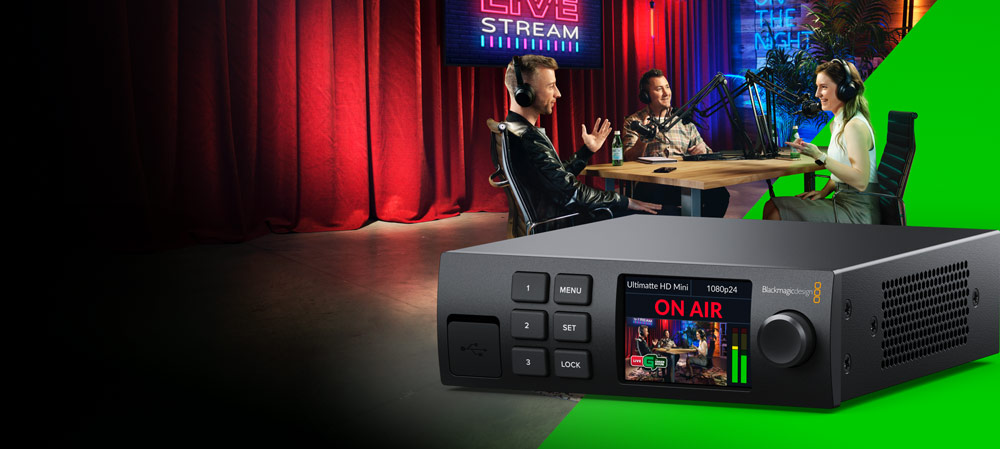 Blackmagic Configuration DaVinci Resolve Micro Panel with Resolve Soundstage Software [/caption]
Key Features
- 3 x High-Resolution Trackballs
- 12 x Primary Correction-Control Knobs
- 18 x Navigation and Transport Keys
- USB Type-C Interface
- Supports Mac and Windows
- Supports Select Linux Installations
- USB 3.0 Type-A to Type-C Cable Included
Shop by Categories


Explore other brands


